
You're drowning. Client meetings are back-to-back, your inbox is a warzone, and you're prepping for tomorrow's review at 10 PM again. The answer feels obvious: hire someone.
A junior advisor. Fresh energy. Someone to take client calls, handle follow-ups, maybe run a few reviews. Problem solved, right?
Not quite.
Here's the uncomfortable truth most RIAs learn the hard way: hiring a junior advisor into broken operations doesn't solve your capacity problem : it multiplies it.
If your CRM is a mess, your workflows are inconsistent, and you're still manually doing things that should be automated, adding another person just means two people are now stuck in the chaos instead of one.
Let's talk about why fixing your back office should come before that first hire : and how doing it in the right order can actually set your firm up to scale intelligently.
The Real Problem: Hiring Into a Broken System
Most advisors hit a wall around 60–80 clients. You're busy, but you're not growing. Every new client feels like it's going to tip you over the edge. So you think: "I need help."
But here's what actually happens when you hire a junior advisor before your operations are clean:
They inherit your chaos. Your inconsistent processes become their inconsistent processes. If you don't have documented workflows for client onboarding, meeting prep, or CRM updates, they're going to wing it : just like you did.
You spend more time managing than doing. Now you're not just doing the work : you're explaining how to do the work, checking if it was done right, and redoing it when it wasn't. That's not leverage. That's a second job.
Burnout happens faster. Junior advisors often leave firms not because the work is hard, but because the systems are unclear. According to research from Kitces.com, many junior hires fail due to "misalignment, miscommunication, and missed opportunities" in onboarding and development : not lack of skill or effort.
You can't onboard someone into a role that doesn't have structure. And you can't delegate tasks that aren't repeatable.

The High Cost of Hiring vs. Outsourcing Your Back Office
Let's do the math : because this decision isn't just operational, it's financial.
The cost of hiring a junior advisor:
- Salary: $50,000–$70,000/year (conservative estimate)
- Payroll taxes and benefits: +20–30% ($10,000–$21,000)
- Training time: 3–6 months before they're productive
- Office space, tech licenses, compliance oversight: another $5,000–$10,000/year
- Total first-year cost: $70,000–$100,000+
And that's if the hire works out.
The cost of outsourced back-office support:
- Virtual admin or paraplanning support: $1,500–$3,500/month ($18,000–$42,000/year)
- No benefits, no payroll taxes, no onboarding lag
- Scalable : ramp up or down based on actual workload
- Specialists who already know Redtail, Wealthbox, eMoney, and your compliance workflows
- Total first-year cost: ~$20,000–$45,000
You're looking at 50–70% savings : and you get someone who can start contributing in week one, not month four.
Here's the bigger point: outsourcing your admin and operations work first gives you the bandwidth to actually evaluate whether you need a junior advisor at all. In many cases, firms realize they don't : they just needed their time back.
Fix the Workflows First: Redtail, Wealthbox, and eMoney Aren't the Problem
Most advisors think their capacity problem is a people problem. It's not. It's a process problem.
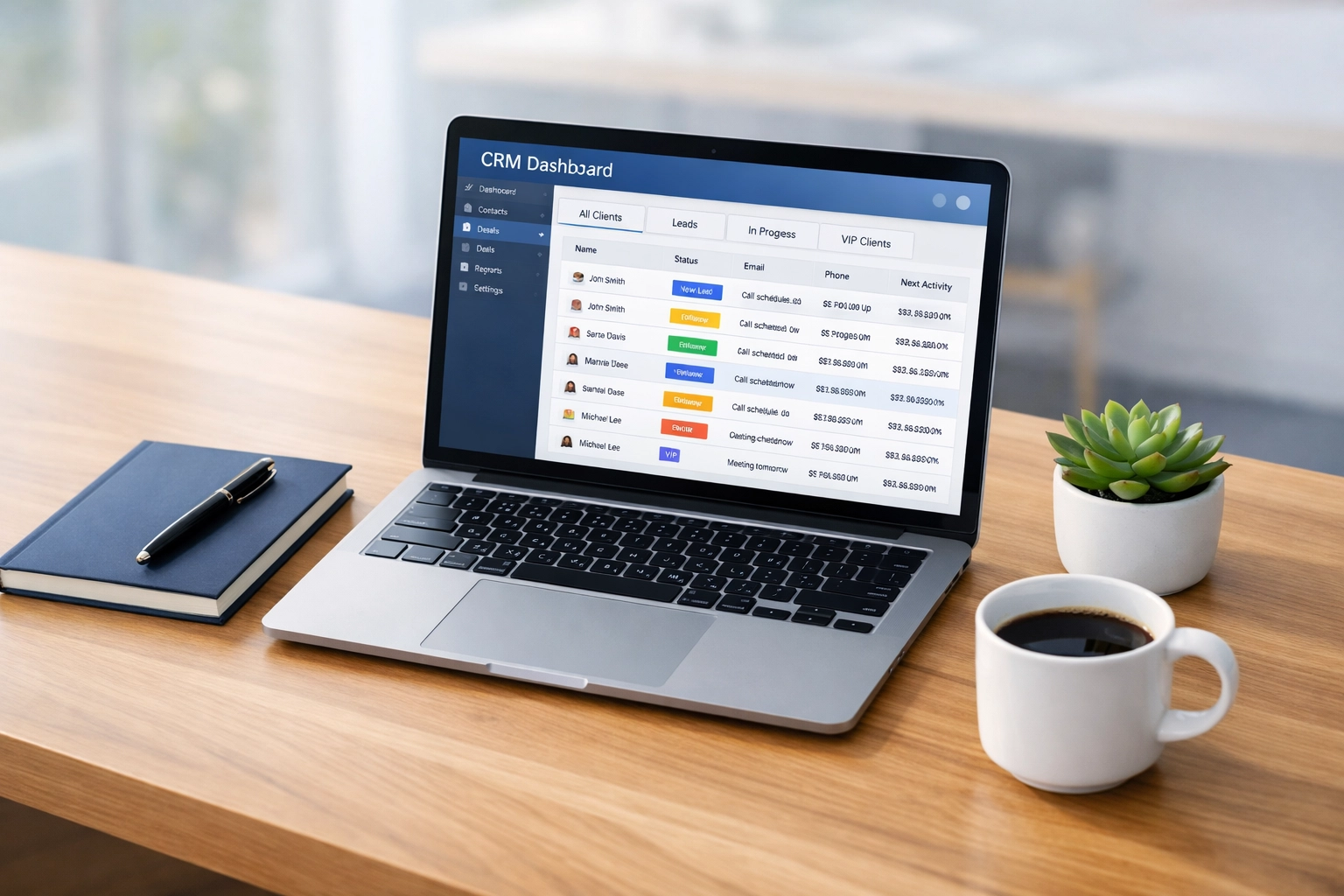
Your CRM is probably a mess : incomplete notes, inconsistent tagging, random follow-up reminders that mean nothing six months later. Your meeting prep is done from scratch every time. Your client onboarding checklist lives in your head, not in a document.
This is what actually eats your time:
- Hunting for client info because your CRM wasn't updated properly
- Rebuilding the same meeting agenda format for the 47th time
- Manually tracking deliverables and follow-ups instead of automating them
- Doing data entry that should've been batched and delegated weeks ago
The tools aren't the issue : Redtail, Wealthbox, and eMoney are powerful when used correctly. The issue is that no one has taken the time to build repeatable systems around them.
Fixing your workflows means:
- Standardizing your CRM data entry and tagging structure
- Creating meeting prep templates and checklists
- Automating routine follow-ups and reminders
- Delegating admin tasks to a virtual team that specializes in advisor support
Once those systems are in place, then you can bring on a junior advisor : and they'll step into a firm that actually runs smoothly. They'll know what to do, how to do it, and what good looks like. That's when hiring pays off.
You Can't Scale Chaos: Fix the Pipes Before Adding More Clients
Here's a hard truth: if your operations are broken at 60 clients, they'll be catastrophic at 100.
Scaling isn't about working harder or adding more people to the fire drill. It's about building systems that can handle growth without you being the bottleneck.
Think of your firm like plumbing. If the pipes are leaking, clogged, or poorly connected, adding more water pressure doesn't help : it just causes more problems. You need to fix the infrastructure first.
That means:
- Clean, well-maintained CRM workflows
- Documented processes for onboarding, meeting prep, and client communication
- Clear division of responsibilities (even if some are outsourced)
- Automation wherever possible : scheduling, reminders, routine follow-ups
When those pipes are solid, you can scale. You can add clients, hire team members, and grow revenue without everything breaking.
But if you skip this step and just hire someone to "help out," you're scaling chaos : and chaos doesn't scale. It just gets louder.
How The CollabHub Builds the Infrastructure So Your Junior Advisor Can Actually Succeed
Here's where we come in : and why this approach works.
At The CollabHub, we don't just "do tasks." We help RIAs build the operational backbone that makes growth sustainable. That means cleaning up your CRM, building your workflows, handling your admin work, and creating the structure that lets you focus on advice : and eventually, lets a junior advisor step into a role that's actually set up for success.
We work as an extension of your team:
- CRM cleanup and maintenance (Redtail, Wealthbox, Salesforce)
- Meeting prep and follow-up coordination
- Client onboarding and offboarding workflows
- Paraplanning and report generation
- Routine data entry, scheduling, and administrative support
And here's the key: we're not a placeholder until you hire. We're the infrastructure that makes the hire successful when you're ready.
When your back office is handled and your processes are clean, bringing on a junior advisor becomes a strategic move : not a desperate one. They step into clarity, not chaos. And they can actually focus on learning financial planning, building client relationships, and growing with your firm : instead of just trying to survive it.

Key Takeaways: Hire Smart, Not Fast
If you're feeling the pressure to hire, pause and ask yourself:
- Do I have documented workflows? If a new hire asked, "How do we onboard a client?" could you hand them a checklist?
- Is my CRM clean and current? Or would they spend a week just figuring out where information lives?
- Am I at 80% capacity : or 120%? If you're already underwater, hiring won't save you. Fixing operations will.
- Can I afford $70K–$100K in year one? Or would $25K–$40K in outsourced support give me the same result (or better)?
Most advisors are better off investing in operational infrastructure before they invest in headcount. It's faster, cheaper, and actually solves the root problem: you don't have a people shortage. You have a process problem.
Frequently Asked Questions
When should I hire a junior advisor instead of outsourcing?
Hire when you have clean operations, documented workflows, and a clear advancement path for that person. If your systems are messy, outsource first : then hire into a firm that actually functions.
Can outsourcing really replace a junior advisor?
Not entirely : but it can replace 70–80% of what you think you need a junior for. If you need someone for admin, CRM work, meeting prep, and follow-ups, outsourcing handles that. If you need someone for client-facing planning work and relationship building, that's when you hire.
How long does it take to fix operations before I can hire?
With the right support, 60–90 days. That's enough time to clean your CRM, document key workflows, and delegate recurring admin tasks. After that, you'll have the clarity to know if you even need to hire : or if you just needed your time back.
Want to see how we structure backend operations for growing RIAs? If your firm is feeling the strain of admin work, we can help simplify your systems so your team can focus on clients : not paperwork. Let's talk.
About the Author
Mohammad Aamish Aaftab is the Founder of The CollabHub, a consulting and back-office support firm helping US Financial advisory firms streamline operations, strengthen client delivery, and scale sustainably.
With years of experience working with global firms across the U.S., U.K., and U.A.E., Aamish has built a reputation for turning inefficient workflows into efficient, scalable systems. His focus lies in helping firms operate smarter : not harder : by designing backend processes that reduce overwhelm, save time, and improve profit margins.
Aamish combines his background in financial planning, business operations, and process consulting to help accounting leaders regain clarity, consistency, and control in their practice : so they can focus on what truly matters: their clients and their long-term growth.