
As a solo advisor or small RIA founder, you've probably asked yourself this question at 7 PM on a Tuesday while drowning in administrative tasks that should have been done hours ago. The truth is, most advisors don't fail because they can't plan: they fail because they can't manage the endless stream of admin work that comes with running a practice.
A perfect assistant isn't just someone who answers phones and schedules meetings. They're your operational backbone, handling the predictable, recurring tasks that consume your billable hours and mental bandwidth. But knowing exactly what to hand off: and how: makes the difference between hiring help and hiring headaches.
The Daily Operations Your Assistant Should Own
Calendar Management and Meeting Orchestration
Your assistant should treat your calendar like mission-critical infrastructure. This means more than just booking appointments. They should understand your meeting rhythms: how much prep time you need between client meetings, which days work best for prospecting calls, and when you're most effective for complex planning sessions.
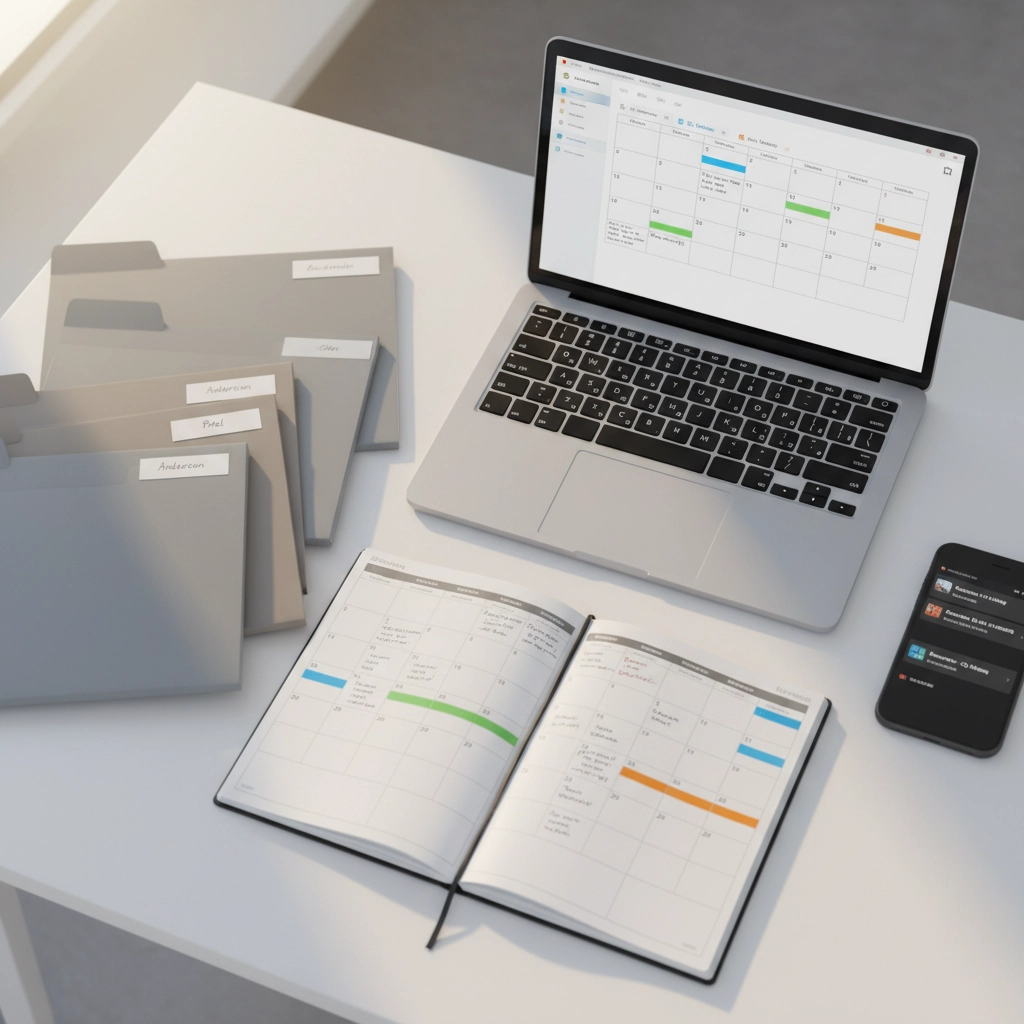
They should also handle the entire meeting lifecycle: sending calendar invites with agenda previews, confirming appointments 24-48 hours ahead, preparing meeting rooms (virtual or physical), and following up with action items within hours of each meeting ending. A good assistant knows that a 2 PM client review meeting actually starts at 1:45 PM with the right prep materials ready.
CRM Data Entry and Maintenance
This is where most advisor practices leak value. Your perfect assistant should maintain your CRM like a meticulous librarian, ensuring every client interaction, document, and follow-up task is captured accurately and consistently. They should update contact information immediately, log meeting notes within 24 hours, and flag any data inconsistencies they spot.
More importantly, they should understand your CRM workflows well enough to spot when clients haven't been contacted in too long or when important deadlines are approaching. Your CRM should be a reliable source of truth, not a graveyard of outdated information.
Client Communication and Follow-Up
Beyond answering phones, your assistant should manage the predictable communication patterns that eat up your day. This includes sending meeting confirmations, forwarding relevant market updates to specific client segments, and handling routine service requests that don't require your expertise.
They should also manage your email inbox using a clear prioritization system: urgent client issues get immediate attention, routine administrative emails get batched for specific times, and everything gets categorized so nothing falls through the cracks.
Weekly and Monthly Responsibilities That Scale Your Practice
Paraplanning and Report Preparation
For advisors working with higher-net-worth clients, paraplanning for financial advisors becomes crucial. Your assistant should handle the research-heavy, time-intensive aspects of plan preparation: gathering account statements, updating client fact-finders, running initial software projections, and preparing draft reports for your review.
They shouldn't be making planning recommendations: that's your expertise: but they should handle the data collection and basic analysis that transforms a blank planning software screen into a 90% complete plan that just needs your strategic input.

Client Onboarding Process Management
New client onboarding is where many practices either shine or stumble. Your assistant should own this entire process: sending welcome packets, scheduling the initial data-gathering meeting, collecting required documents, coordinating with custodians for account transfers, and ensuring compliance documents are completed correctly.
A systematic onboarding process managed by your assistant ensures every new client has the same excellent experience, regardless of how busy you are with other responsibilities.
Compliance Documentation and Filing
While you remain responsible for compliance decisions, your assistant should handle the documentation and record-keeping requirements. This includes maintaining client files, tracking continuing education credits, preparing for routine audits, and ensuring all required disclosures are current and properly filed.
They should also maintain a compliance calendar that alerts you well in advance of filing deadlines, renewal requirements, and other regulatory obligations.
What to Delegate vs. What Requires Your Oversight
Delegate Completely: Routine Administrative Tasks
These tasks should happen without your involvement: appointment scheduling, basic data entry, document filing, travel arrangements, expense tracking, and routine client service requests. Your assistant should handle these independently, reporting exceptions rather than seeking approval for standard processes.
Delegate with Systems: Client Communication
Your assistant can handle most client communication using templates and protocols you've established. They should know how to respond to common questions, when to schedule follow-up meetings, and how to escalate issues that require your attention. The key is having clear scripts and decision trees that maintain your voice and standards.
Oversight Required: Strategic Planning Support
While your assistant can prepare the groundwork for financial plans, you maintain oversight of all planning recommendations and client advice. They prepare the data and initial analysis; you provide the strategic insight and final recommendations. This division ensures efficiency without compromising the quality of advice your clients expect.
Automation Opportunities That Free Up Both You and Your Assistant
Automated Data Feeds and Report Generation
Modern scalable back office solutions can automatically update client portfolios, generate performance reports, and populate planning software with current account values. Your assistant should manage these automated systems, troubleshoot when they fail, and ensure the data quality remains high.
Client Communication Automation
Automated email sequences for onboarding new clients, birthday messages, quarterly check-ins, and market update distributions can reduce your assistant's communication workload while maintaining consistent client touch points. Your assistant should monitor these systems and personalize messages when appropriate.
Compliance and Filing Automation
Many compliance tasks can be automated or semi-automated, from continuing education tracking to client document storage. Your assistant should leverage these tools while maintaining the oversight needed to ensure nothing critical gets missed.

Assessing Your Current Support Gap
Before hiring your next assistant or evaluating your current support, conduct this simple assessment:
Time Audit: Track your activities for one week. How many hours do you spend on tasks that don't require your expertise as an advisor? These hours represent your immediate opportunity for delegation.
Revenue-Per-Hour Calculation: Divide your annual revenue by your total working hours. Any task your assistant can handle that costs less than this rate should be delegated immediately.
Client Experience Review: Survey recent clients about their onboarding and service experience. Identify any friction points that better administrative support could resolve.
Compliance Risk Assessment: Review your filing systems, documentation processes, and regulatory requirements. Where are you most vulnerable to errors or oversights that an organized assistant could prevent?
The ROI of Getting This Right
When you find an assistant who can handle these responsibilities effectively, the math becomes compelling quickly. If you bill $300 per hour for planning work, every hour of administrative tasks you delegate creates $300 of potential value: assuming you can fill that time with billable work or business development.
But the benefits go beyond pure revenue calculation. Better administrative support improves client satisfaction, reduces compliance risk, and most importantly, gives you the mental bandwidth to focus on the strategic aspects of your practice that actually drive long-term growth.
The key is being specific about what you need, systematic about how tasks should be completed, and clear about the standards you expect. Most assistants want to do excellent work: they just need the framework and authority to make it happen.
Data security in outsourcing becomes critical when working with any assistant, whether in-house or remote. Ensure your assistant understands your privacy requirements, uses secure systems for client data, and follows protocols that protect both your practice and your clients' confidential information.
Your perfect assistant isn't just someone who takes tasks off your plate: they're someone who makes your entire practice run more smoothly, professionally, and profitably. The investment in finding and training the right person pays dividends in reduced stress, improved client service, and the freedom to focus on what you do best: providing excellent financial advice.
If you're ready to build these systems but need help structuring the backend operations that make great assistance possible, we work with advisory firms to design scalable administrative workflows that grow with your practice.
About the Author
Mohammad Aamish Aaftab is the Founder of The CollabHub, a consulting and back-office support firm helping US Financial advisory firms streamline operations, strengthen client delivery, and scale sustainably.
With years of experience working with global firms across the U.S., U.K., and U.A.E., Aamish has built a reputation for turning inefficient workflows into efficient, scalable systems. His focus lies in helping firms operate smarter : not harder : by designing backend processes that reduce overwhelm, save time, and improve profit margins.
Aamish combines his background in financial planning, business operations, and process consulting to help accounting leaders regain clarity, consistency, and control in their practice : so they can focus on what truly matters: their clients and their long-term growth.